
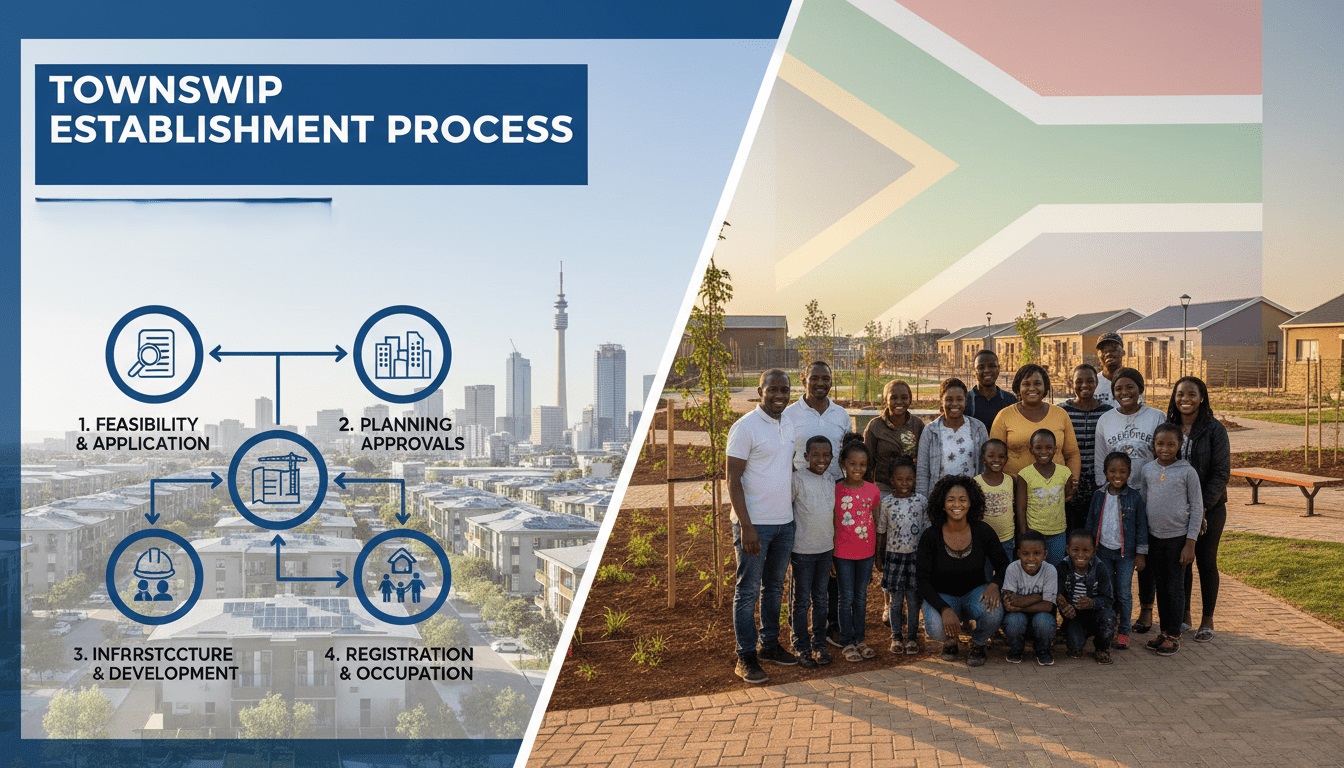
The urban landscape of Johannesburg is constantly evolving. New developments are crucial for growth. Understanding the township establishment process Johannesburg is vital. This guide simplifies a complex journey. It helps developers, planners, and interested parties navigate the steps. Establishing a new township involves many legal and administrative stages. It requires careful planning and adherence to regulations.
What is Township Establishment?
Township establishment is the formal process. It converts undeveloped land into a planned urban area. This area is then divided into stands or erven. These stands are for various uses. Examples include residential, commercial, industrial, or public open spaces. The process ensures structured development. It provides necessary infrastructure and services. It is a cornerstone of urban planning in South Africa.
Key Stages in the Township Establishment Process Johannesburg
Embarking on the township establishment process Johannesburg requires precision. Each stage is critical. Skipping steps can lead to significant delays. Developers must prepare thoroughly. They need to understand municipal and provincial requirements. This multi-faceted journey ensures sustainable growth.
1. Initial Feasibility and Due Diligence
Before any formal application, a feasibility study is essential. This assesses the land’s suitability. It considers zoning, environmental factors, and market demand. Due diligence checks for any title deed restrictions. It also examines servitudes or other encumbrances. This early stage saves time and resources later on. It identifies potential roadblocks upfront.
2. Application Submission
The formal application begins with the local municipality. In Johannesburg, this is the City of Johannesburg Metropolitan Municipality. The application includes detailed plans and reports. These documents outline the proposed land use. They also show the layout and services. Submissions are made under relevant planning legislation. This typically includes the Spatial Planning and Land Use Management Act (SPLUMA). Provincial approval may also be needed.
3. Public Participation Process
Community engagement is a mandatory step. The public must be informed about the proposed township. They have an opportunity to comment or object. Notices are published in local newspapers. Site notices are also erected on the property. This process ensures transparency. It allows affected parties to voice concerns. Addressing these concerns is crucial for approval.
4. Environmental Impact Assessment (EIA)
Many township developments require an EIA. This assesses potential environmental effects. It covers aspects like water, biodiversity, and pollution. The National Environmental Management Act (NEMA) governs EIAs. A specialist consultant usually conducts this assessment. The goal is to mitigate negative impacts. It ensures sustainable development practices.
5. Approval and Proclamation
Once all requirements are met, the municipality reviews the application. They consider all reports and public comments. If approved, the provincial government then formally proclaims the township. This proclamation is published in the Provincial Gazette. It officially recognizes the new township. This is a significant milestone in the process.
6. Service Agreements and Infrastructure
Before stands can be sold, essential services must be in place. This includes water, sanitation, electricity, and roads. Developers enter into service agreements. These are with relevant service providers. They commit to installing or upgrading infrastructure. This stage often involves substantial financial investment. It ensures the new community has basic necessities.
Understanding the costs involved in land development is key. Developers often face various fees and charges. These include application fees and bulk service contributions. For more information on similar land-use changes, you might find our guide on rezoning application cost South Africa helpful. It provides insights into related financial aspects.
7. Registration of Stands
The final step involves the formal registration of individual stands. This happens at the Deeds Office. Each stand receives a unique erf number. The township register is opened. This allows for the transfer of ownership to buyers. This marks the completion of the township establishment process. New homeowners can then legally acquire property.
Challenges and Key Considerations
The path to establishing a township is not without hurdles. Navigating bureaucratic processes can be slow. Compliance with various acts and regulations is complex. Financial planning is critical. Unexpected costs or delays can arise. Engaging with local communities requires sensitivity and effective communication. Developers must also consider market demand and economic viability. Johannesburg’s unique urban dynamics add another layer of complexity. The city’s growth trajectory makes efficient development crucial.
New townships contribute significantly to urban expansion. They offer opportunities for housing and business. This growth also impacts local economies. For instance, the rise of e-commerce is creating new opportunities in these developing areas. You can read more about unpacking the e-commerce growth in townships to understand market shifts.
Why is Township Establishment Important?
Township establishment is vital for urban development. It provides planned housing solutions. It creates new economic zones. It helps manage population growth effectively. Proper planning prevents informal settlements. It ensures access to services and amenities. This process shapes the future of Johannesburg. It creates sustainable communities for its residents.
Conclusion
The township establishment process Johannesburg is a monumental undertaking and best handled by Glensburg Town Planners. It demands expertise, patience, and significant investment. From initial concept to final registration, each stage is interconnected. Successful completion leads to new, vibrant communities. These contribute to the city’s overall development. Understanding this process is the first step. It empowers all stakeholders to participate effectively. It helps build a better future for Johannesburg.