
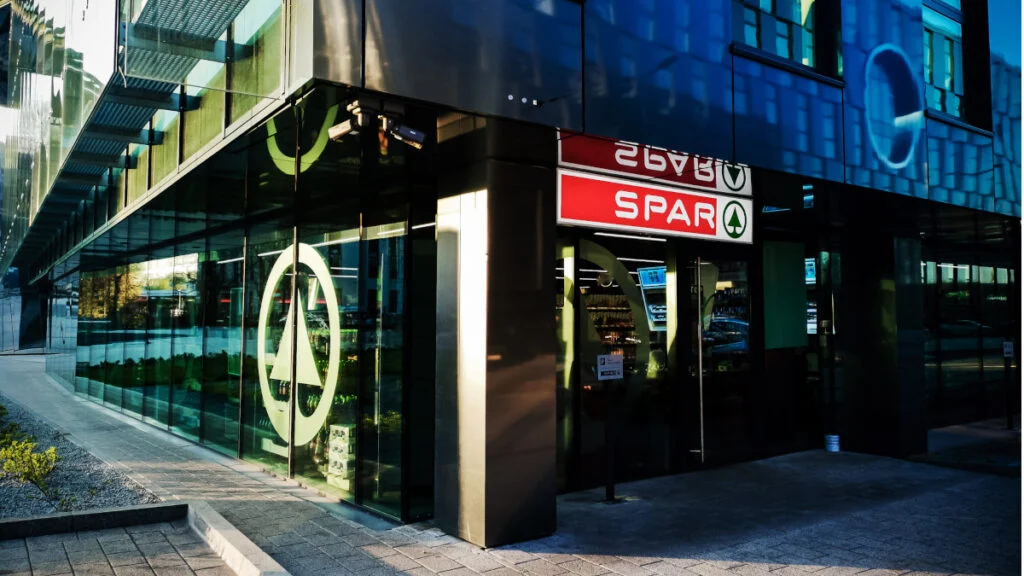
SPAR recently announced a significant financial setback. The retailer recorded an over R5 billion loss. This substantial figure emerged amid the strategic sale of its international businesses. Specifically, its operations in Switzerland and England were divested. Despite these challenging global developments, SPAR’s performance within South Africa showed positive signs. This stark contrast highlights a period of significant transition for the group.
SPAR R5 Billion Loss: The International Retreat
SPAR’s latest financial results cover the year ending September 26. These figures reveal a clear division in performance. The group’s continuing operations reported a profit of R1.1 billion. This indicates a stable core business. However, the discontinued operations presented a different picture. These included its Swiss and English businesses. They collectively recorded a massive loss of R6.1 billion. This substantial loss from international ventures significantly impacted the overall financial outcome for the group.
During this period, SPAR confirmed the conclusion of its European strategic exits. The company is also making steady progress. This involves the ongoing disposal of AWG. AWG is located in South-West England. These actions reflect a deliberate strategy to streamline operations. The focus is now on core markets.
The Costs of Global Divestment
The sale of SPAR Switzerland was finalized in September. The total equity value for this transaction was CHF 46.5 million. This translates to approximately R1,025 million. The agreement includes potential future earn-out payments. These could reach up to CHF 30 million, or about R660 million. These payments are contingent upon specific EBITDA targets being met by 2027.
However, the sale also incurred significant costs. It resulted in a cash outflow of CHF 31 million. This is approximately R683 million for the South African retailers. A portion of this outflow, CHF 11.5 million (around R250 million), was paid to the Swiss Competition Commission. These figures underscore the complex financial implications of exiting international markets.
Prior to these divestments, SPAR had also exited its Polish business. This sale generated R185 million. Yet, the group faced further financial obligations. It had to pay R2.7 billion to recapitalize the Polish unit. Such costs highlight the complexities and financial commitments involved in international market withdrawals.
Strategic Asset Revaluation
During the financial period, SPAR undertook a comprehensive assessment. This involved reviewing the carrying value of certain assets. This process led to significant impairments. Specifically, corporate stores’ goodwill right-of-use assets in Southern Africa were affected. There were also impairment charges. These related directly to SPAR Switzerland and AWG. These revaluations are crucial for accurate financial reporting.
The group explicitly stated its rationale behind these actions. These were deliberate steps. They aimed to ensure that asset carrying values accurately reflect their cash-generating potential. They also align with current market conditions. This strategic approach provides a clearer earnings base for the future. It also presents a more representative balance sheet. Furthermore, it improves capital structure visibility going forward. This transparency is vital for investor confidence.
Financial Shift and No Dividend Declaration
An examination of SPAR’s financial statements reveals a significant shift. The group’s net debt experienced a reduction. It decreased to R5.4 billion. This is a notable improvement from R9.1 billion in FY24. This reduction was primarily driven by the exits from Switzerland and Poland. These strategic moves helped to de-leverage the company.
However, the overall income statement tells a stark story. The group transitioned from a profit of R158 million in FY24. It moved to a substantial loss of R5.1 billion. This dramatic reversal reflects the impact of the international divestments. Consequently, earnings per share also saw a dramatic fall. They dropped from 182.7 cents in FY24. This resulted in a loss per share of 2,507.0 cents. Amid this considerable loss, the group made a difficult decision. It did not declare a dividend for the period. This reflects a prudent financial management approach during a challenging time.
Southern Africa’s Resilient Performance
Despite the financial challenges faced internationally, SPAR’s Southern African operations delivered an improved performance. This positive outcome is particularly noteworthy. It occurred despite ongoing pressure on customers’ disposable income. Many consumers continue to face economic headwinds. For more on related economic factors, you can read about SA Social Grants Reform: Beyond R10 Increases.
South Africa’s success stemmed from several key factors. There was better execution at the wholesale level. Enhanced retailer support programmes also played a crucial role. Furthermore, reduced fuel-related logistics costs provided a boost. Insights into these costs can be found in discussions around October 2025 Fuel Price Changes Announced. These combined factors significantly contributed to improved operational stability. They also supported profitability throughout the second half of FY2025.
Growth Across Key Segments
Southern Africa experienced improved growth in merchandise revenue sales. In FY2025 H2, these sales increased by 2.9%. This positive momentum boosted full-year revenue by 2.3%. It demonstrates the robust demand within the region. The Groceries and Liquor business reported a solid year-on-year sales increase of 1.9%. This segment remains a cornerstone of SPAR’s local operations.
The Build it division also saw healthy growth. Its revenue increased by 2.4% year-on-year. This indicates strength in the home improvement sector. SPAR Health continued its impressive scale-up. It emerged as an attractive growth adjacency. The segment achieved a remarkable revenue growth of 13.2%. This was primarily driven by Scriptwise and the wholesale channel. These diverse growth areas highlight the strength of SPAR’s multi-faceted approach in Southern Africa.
Expanding Horizons: Pet Storey’s Launch
During this period, SPAR also ventured into new markets. Pet Storey, a new initiative, acquired the Pet Masters Group businesses. This strategic acquisition expanded SPAR’s retail footprint. The Pet Storey brand was formally launched in September 2025. This marked an important diversification step for the group.
Early indications suggest Pet Storey is making good initial progress. By the end of November 2025, all 12 Pet Masters stores had been successfully converted. The new concept is generating significant interest. There is a strong pipeline for further conversions. This venture represents a promising area for future growth and market penetration.
Conclusion: A Strategic Reorientation
SPAR’s journey through significant international divestments marks a strategic pivot. While confronting a substantial global SPAR R5 billion loss, the company is reorienting. The focus is now firmly on robust growth. This growth is evident within its resilient Southern African core markets. The strategic exits, though costly, are intended to create a leaner, more focused organization. The future for SPAR appears to be anchored in its domestic strength and promising new ventures like Pet Storey. This reorientation aims to build a more sustainable and profitable future.